Africa Day marks the founding of the Organisation of African Unity on May 25, 1963, when representatives of thirty African nations gathered in Addis Ababa to chart a path out of colonial rule. The organization became the African Union in 2002. The date has stood for sixty years as a marker of independence, unity, and the ongoing work of building economic self-determination across the continent.
That last part is where this piece sits. Perfumery has drawn on African raw materials for centuries, and the economic self-determination Africa Day points toward has not extended evenly into that supply chain.
Walk through any serious fragrance collection and you are walking through Africa and its diaspora. Frankincense from the Horn of Africa. Myrrh from Somalia and Ethiopia. Geranium from Morocco. Ylang-ylang from the Comoros. Oud from trees that span East Africa through South and Southeast Asia. And vetiver from Haiti, not geographically African but culturally and historically inseparable from the African diaspora, a crop whose cultivation in the Caribbean is rooted in knowledge and labor brought across the Atlantic through the slave trade.
Africa and the African diaspora have supplied some of the most prized raw materials in perfumery for centuries. On Africa Day, the question is straightforward: who benefits from that supply?
Frankincense and Myrrh: The Oldest Trade
Frankincense comes from Boswellia trees, gnarled and drought-resistant, growing across the Horn of Africa, primarily Somalia, Ethiopia, and Eritrea. These trees have been tapped for resin for over 5,000 years. Ancient Egypt used frankincense in temple ceremonies and mummification. The trade routes that moved it north and east built economies across East Africa and the Arabian Peninsula.

A mature Boswellia carteri tree showing dense, overlapping tap scars and beads of resin, Horn of Africa highlands.
Today, Somalia and Ethiopia remain significant exporters. The sustainability picture is complicated. Overharvesting weakens the trees and reduces their ability to regenerate resin. A single tree can only be tapped so many times before it dies. Some suppliers have moved toward responsible sourcing. FLAVEX, a German extraction company, works with a partner in Somaliland that has established nurseries for Boswellia trees, limits collector families, trains them in correct tapping techniques, and enforces a rotation that allows trees to rest for three years between harvests. That is what it looks like when done correctly.
Myrrh comes from Commiphora trees in the same region and faces similar pressures. The fragrance industry's appetite for both materials remains high. The communities that harvest them have historically seen a small fraction of the value those materials generate further along the supply chain.
Vetiver: A Diaspora Crop
Haiti is the world's premier source of vetiver oil, producing a variety that is smokier and more complex than Indonesian vetiver, which runs earthier and more chocolatey. It is a foundational base note in men's fragrance. Guerlain Vetiver, Lalique Encre Noir, and dozens of other classic compositions are built on it.
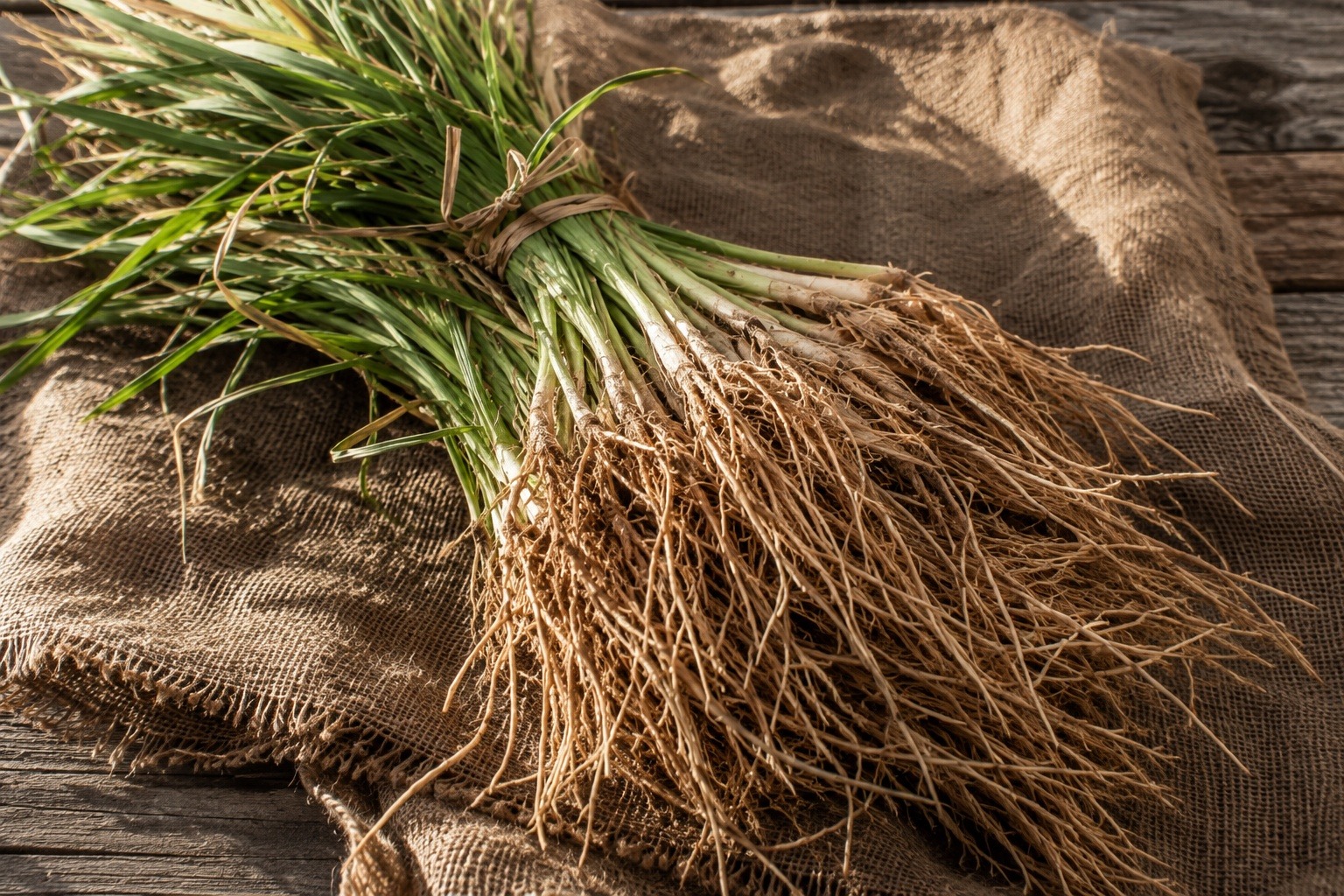
Freshly harvested vetiver roots.
Haiti is not in Africa. But its vetiver industry is inseparable from the African diaspora. The knowledge and labor that built Caribbean agriculture came through the slave trade. The Haitian communities that cultivate vetiver today are among the direct descendants of that history. The plant is known locally as mirak, or the miracle plant, because it stabilizes soil and resists erosion in a country repeatedly devastated by hurricanes and flooding. When the fragrance industry buys Haitian vetiver, it is buying a product of the African diaspora, whether it acknowledges that or not.
Givaudan has been working with a cooperative of 250 vetiver root producers across three Haitian villages since 2012. The cooperative has achieved Ecocert Fair for Life Certification, guaranteeing minimum prices, improved working conditions, and full traceability. A development premium funds community infrastructure including road repairs connecting producer villages to the distillery. That road is not a side benefit. It is what makes the supply chain functional.
Givaudan did this correctly. Most of the industry has not.
Moroccan Rose and the Valley of Roses
Morocco's Dades Valley produces Rosa Damascena, the rose variety used in some of the world's most expensive fragrance materials. Rose absolute from this region is priced at roughly $18,000 per kilogram. The women who harvest those roses earn just under $7 a day during the short April to May picking season. A picker named Izza, profiled by France 24, wakes at dawn to collect three kilos of flowers to earn one dollar. It takes four to five tons of flowers to produce one kilogram of essential oil.
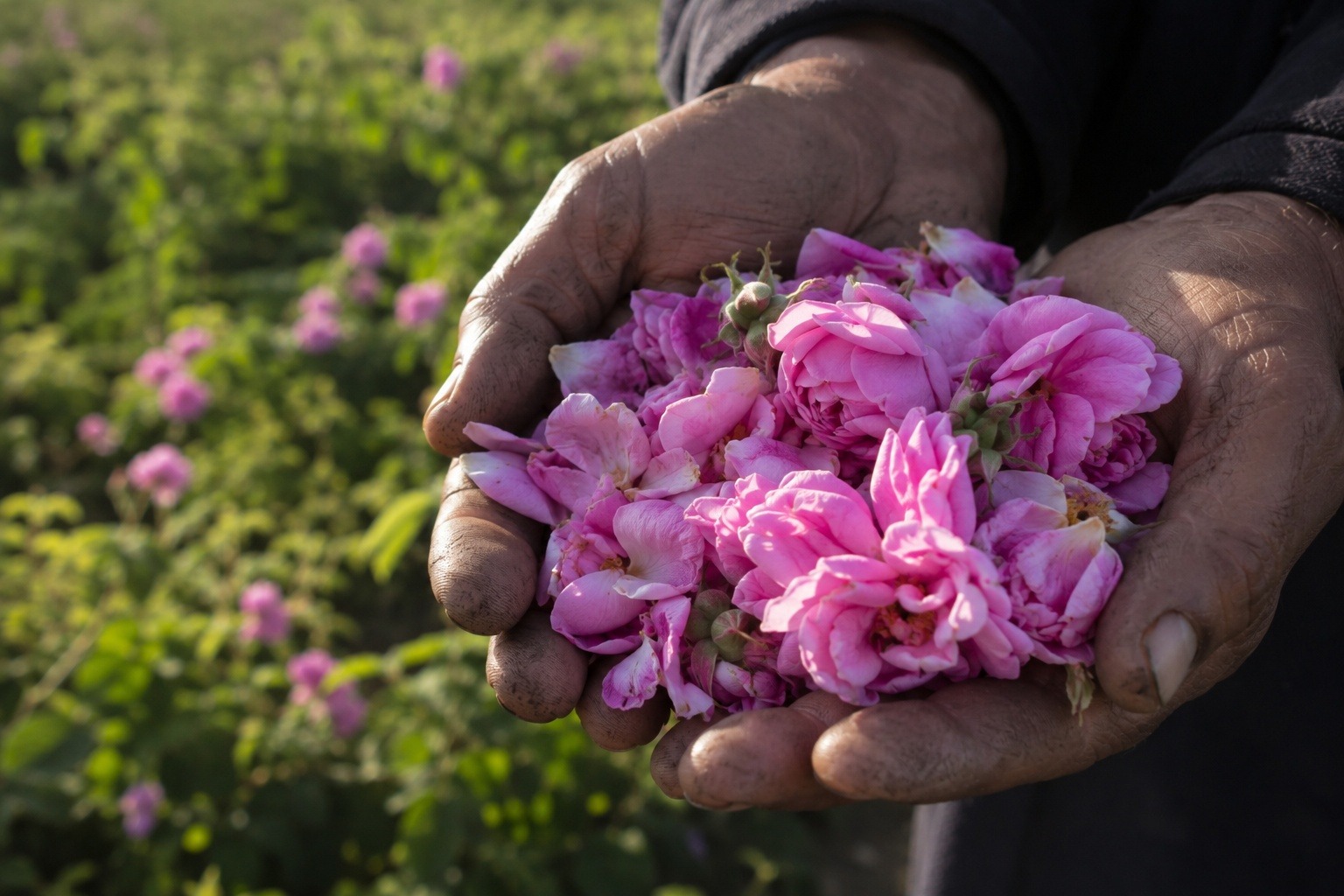
Hand-harvested Damascena rose petals, Dades Valley, Morocco.
The labor is performed almost entirely by women from rural Berber communities, paid by the kilo at piece rate. The season is brutally short. The rose petals are perishable and must be harvested within hours of opening, before the sun damages the aromatic compounds. There is no margin for delay and little margin in the wages.
The jasmine supply chain in nearby Egypt, which produces about half the world's jasmine, has been more directly scrutinized. A BBC investigation found that luxury brands including Lancome and Aerin sourced jasmine from suppliers using child labor. L'Oreal, which owns Lancome, acknowledged the issue and committed to improving transparency. Dior sources jasmine from the Domaine de Manon in Grasse, France, under directly controlled conditions. Bulgari partnered with Firmenich on a three-year ethical harvesting initiative for jasmine in 2019. These are specific commitments by specific brands. Most of the industry has made none.
Ylang-Ylang: The Comoros and Madagascar
The Comoros is the world's largest producer of ylang-ylang, accounting for roughly 60 percent of global supply. Madagascar produces most of the rest. The flower appears in Chanel No. 5, Bois des Iles, Diorissimo, and hundreds of other fragrances. It takes 110 pounds of hand-picked flowers to produce 2.2 pounds of oil. Ylang-ylang pickers in the Comoros earn as little as $6 per day. The oil they produce ends up in bottles retailing for hundreds of dollars.
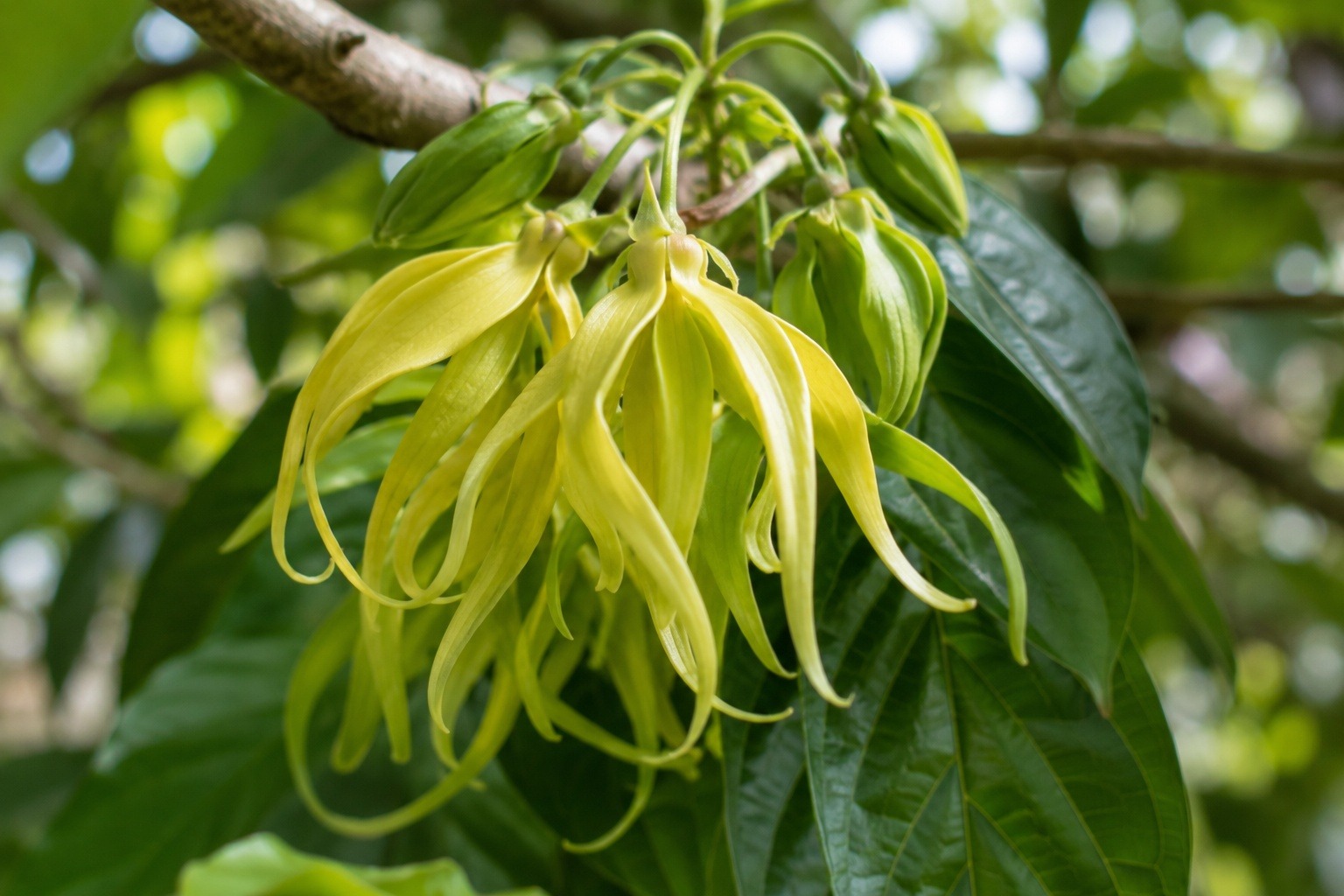
Ylang-ylang flowers, Comoros and Madagascar.
Around 10,000 producers cultivate ylang-ylang in the Comoros, particularly on the island of Anjouan. Women perform most of the harvesting, spending long hours collecting blossoms to sell by the kilogram. The crop provides year-round income, which makes it economically critical for rural households even at the wages being paid.
Some suppliers are addressing this seriously. Biolandes has operated a 270-hectare organic, fair-trade certified plantation in Ambanja, Madagascar since 1997. Givaudan launched a sourcing program on Moheli Island in the Comoros in January 2025, refining the distillation process to capture a higher-quality essence while reducing energy use. Bioylang Comoros, a local company that supplies Chanel, Givenchy, and Hermes, launched the first perfume made and branded by a Comorian company in December 2024. That is a step toward capturing more value within the country rather than exporting all of it to France.
The traditional distillation process is wood-intensive, which creates deforestation pressure in both countries. Solar-powered distilleries are being introduced by cooperatives in the Comoros with EU funding. These are the right moves. The scale of adoption remains small relative to the size of the industry that depends on these islands.
The Extractive Pattern
The pattern across all of these materials is consistent. Africa and the African diaspora supply ingredients that are foundational to global perfumery. The value those ingredients generate is captured primarily at the processing, blending, marketing, and retail end of the supply chain, not at the source. Rose pickers in Morocco earn $7 a day. Ylang-ylang harvesters in the Comoros earn $6. Frankincense collectors in Somalia work trees that take decades to mature. The raw materials and fragrance concentrates in a bottle typically represent between 1% and 5% of the retail price. For some luxury bottles, the natural extract content is as low as 0.01%.
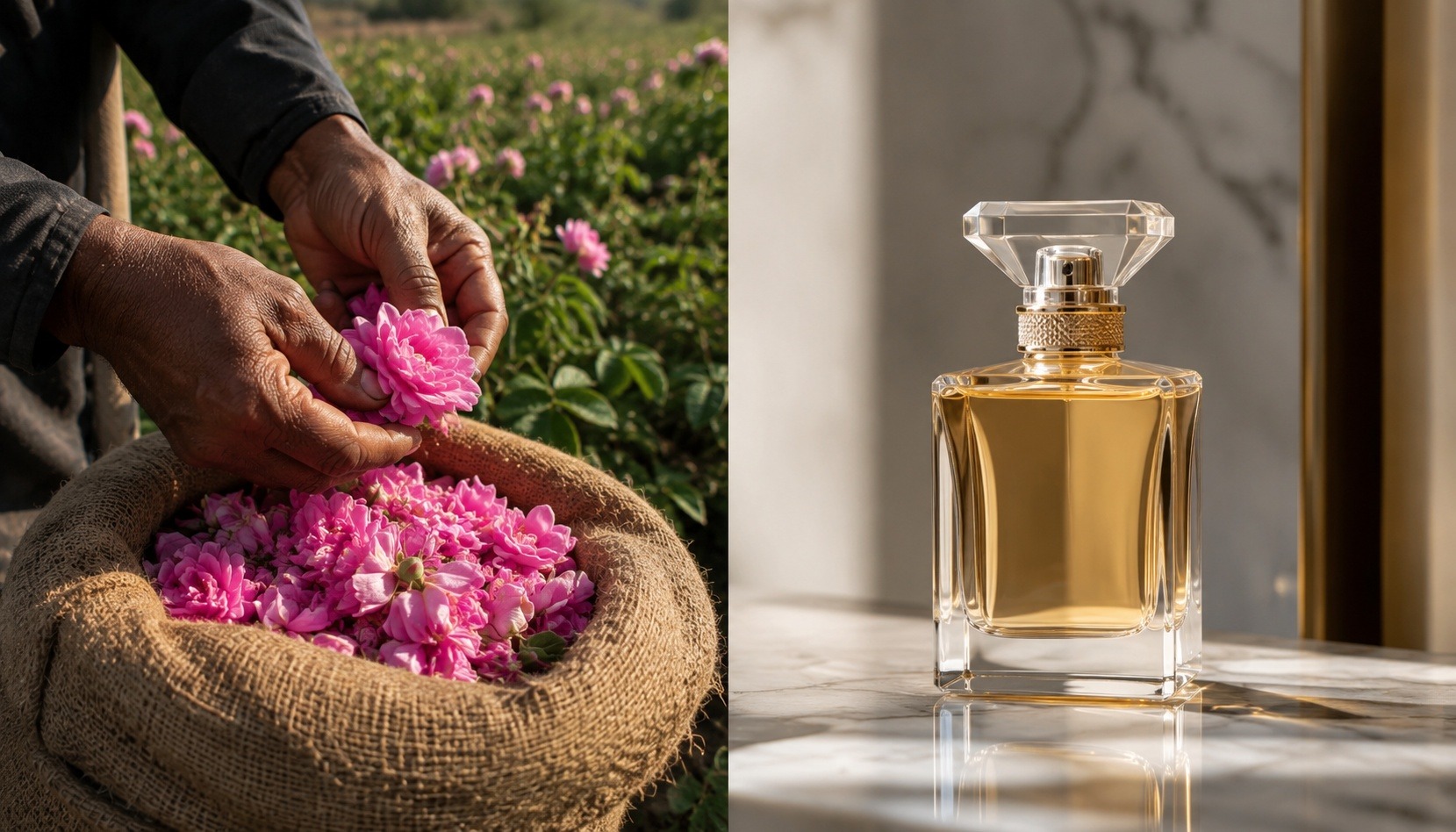
Hand harvesting versus the finished bottle.
Some houses have made genuine commitments. Givaudan's Haiti vetiver cooperative is a real program with certification, fair pricing, and community investment built in. Chanel's sandalwood program in New Caledonia is a fifteen-year investment in a single ingredient. Dior sources jasmine directly from Grasse under controlled conditions. Bioylang Comoros is now supplying Chanel, Givenchy, and Hermes while building its own brand. These are specific, verifiable commitments.
Most of the industry has made none. Brands that cannot name their frankincense supplier, cannot verify that their ylang-ylang pickers are paid a living wage, and cannot trace their rose absolute beyond the intermediary they bought it from are participating in the extractive pattern, regardless of how their marketing is written.
On Africa Day, know where your fragrance comes from. Not to feel guilty about wearing it. To know who grew it, and whether the people at the start of that supply chain are treated with anything close to the care that goes into the bottle at the end of it.
Fragrance Houses of Africa
The world has been borrowing from Africa's perfume cabinet for centuries, frankincense, vetiver, rose, vanilla, vetiver again, usually without sending much back. These seven houses work from the other direction, building scent from the ground they stand on, or the ground their family came from.

Catherine Omai, Contagious Green.
Catherine Omai is Nigeria's first female perfume maker, classically trained at the Galimard School in Grasse. Contagious Green, her bestseller, builds its heart note from Efirin, the Nigerian scent leaf used in local cooking and traditional medicine.
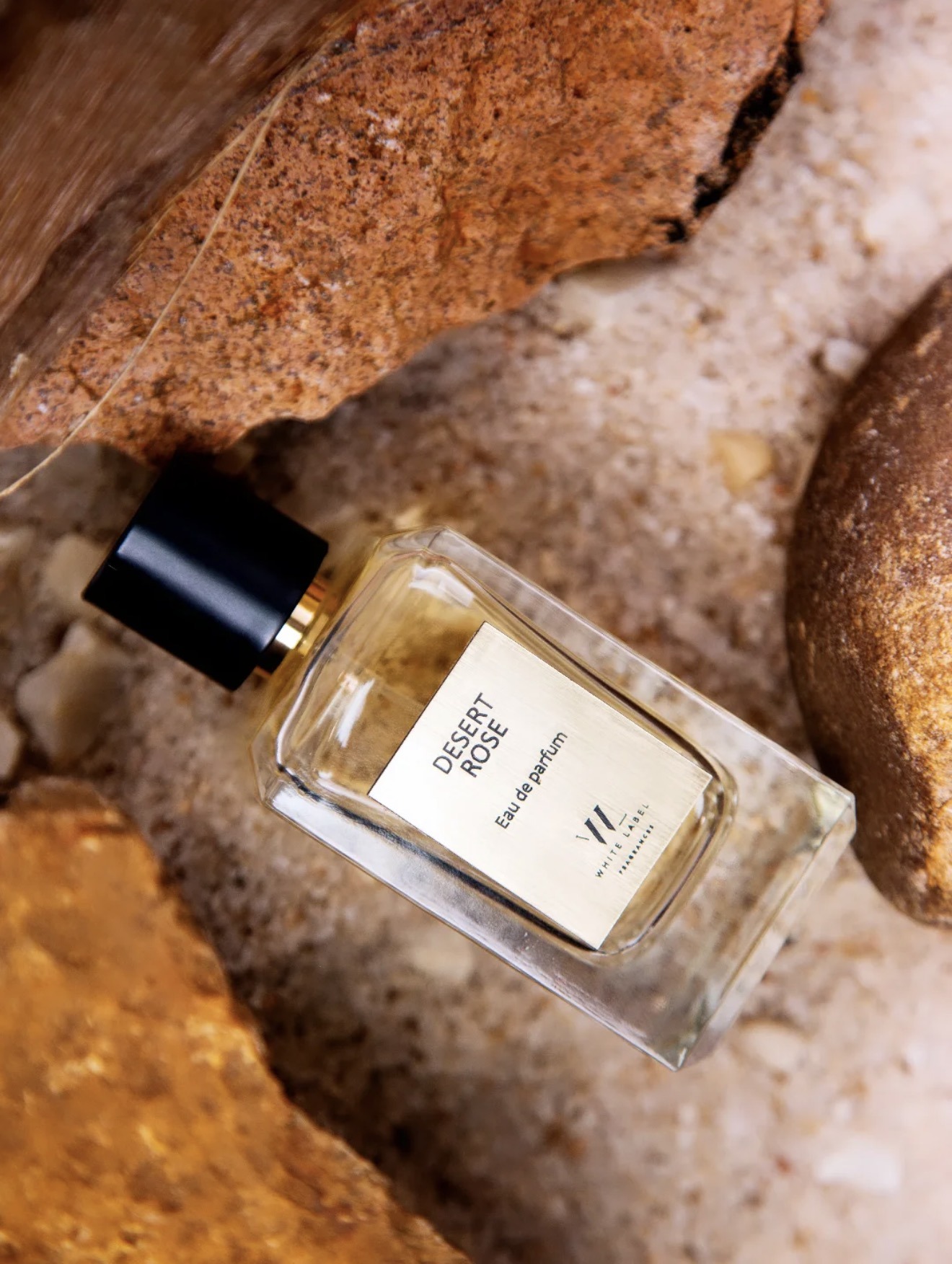
Thamani Thothe, White Label Fragrances — Desert Rose.
Thamani Thothe founded White Label Fragrances in Botswana in 2017, built entirely on local ingredients. Marula oil, baobab, and Kalahari melon seed replace the imported staples most African perfume brands rely on.
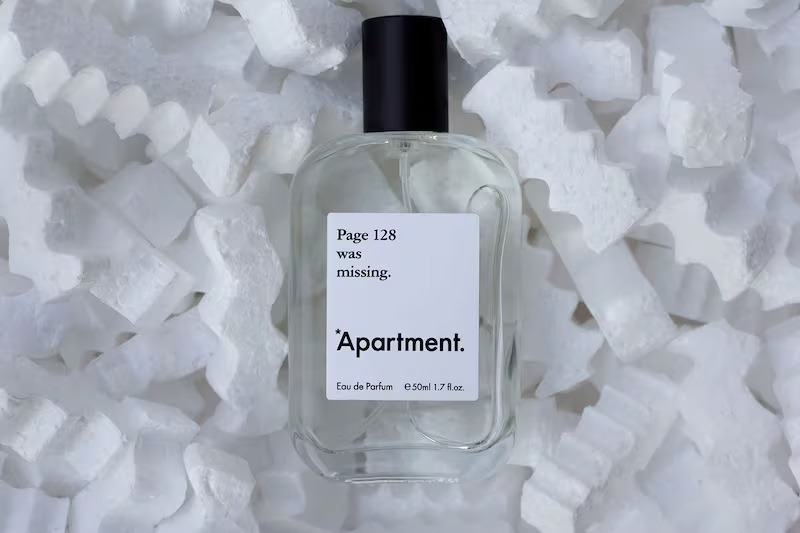
Leigh-Anne Drakes, *Apartment — Page 128 Was Missing.
Leigh-Anne Drakes came to perfumery from photography. Her Johannesburg house, *Apartment, builds abstract, image-driven scents using whatever material gets the idea across, natural or synthetic, proof that African perfumery doesn't have to mean local botanicals to be authentically African.
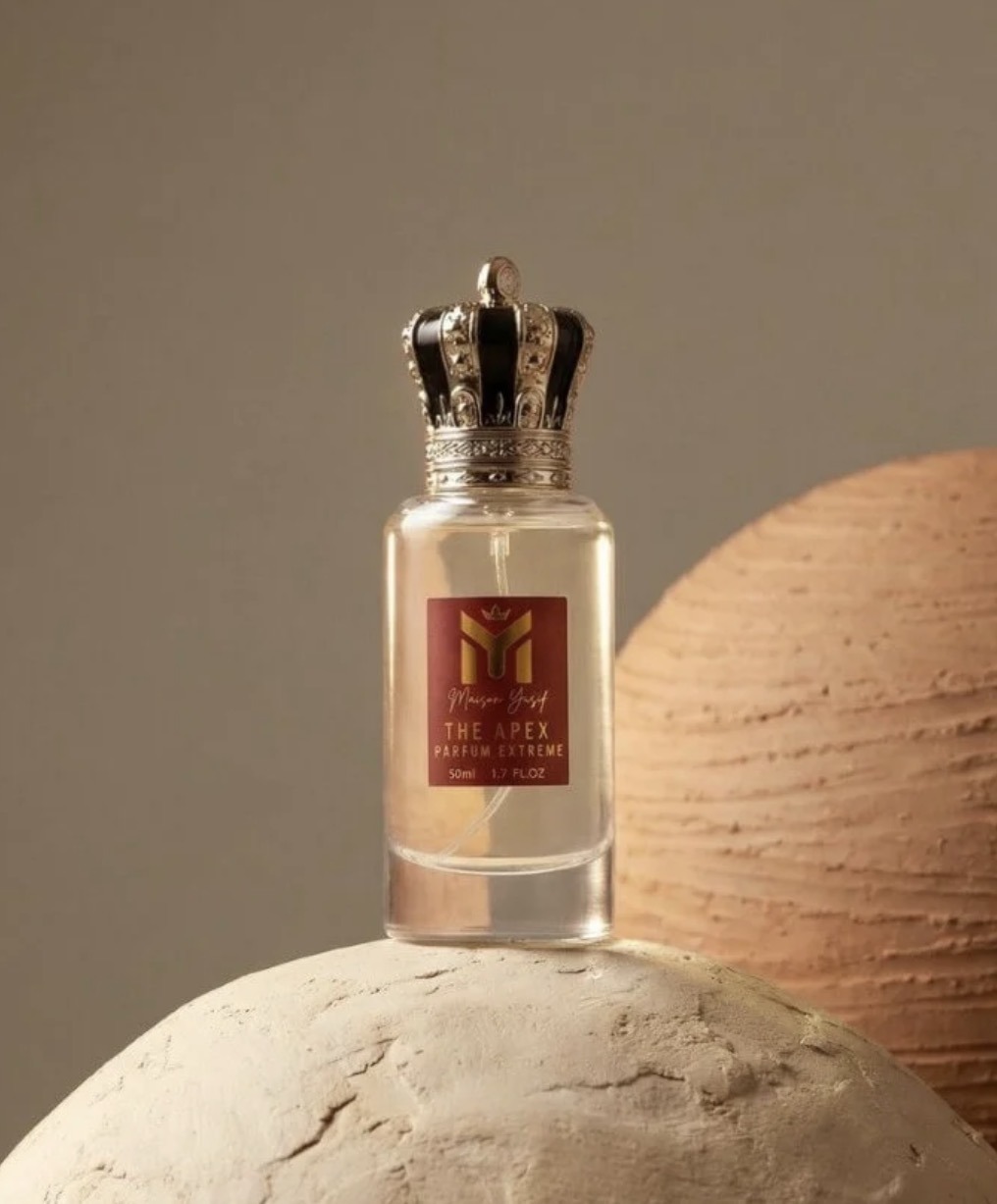
Yusif Meizongo Jnr., Maison Yusif — The Apex.
Yusif Meizongo Jnr. built Ghana's first niche artisan fragrance house and is the first West African certified by the International Perfume Foundation. Maison Yusif works in shea and calabash, ingredients drawn straight from Ghanaian soil.

Maya Njie, Tropica.
Maya Njie is self-taught and based in London, but her father's Gambian heritage runs through her work. Tropica, her own description, is a direct callback to Gambian beaches: pineapple, coconut, fig, and sea salt.
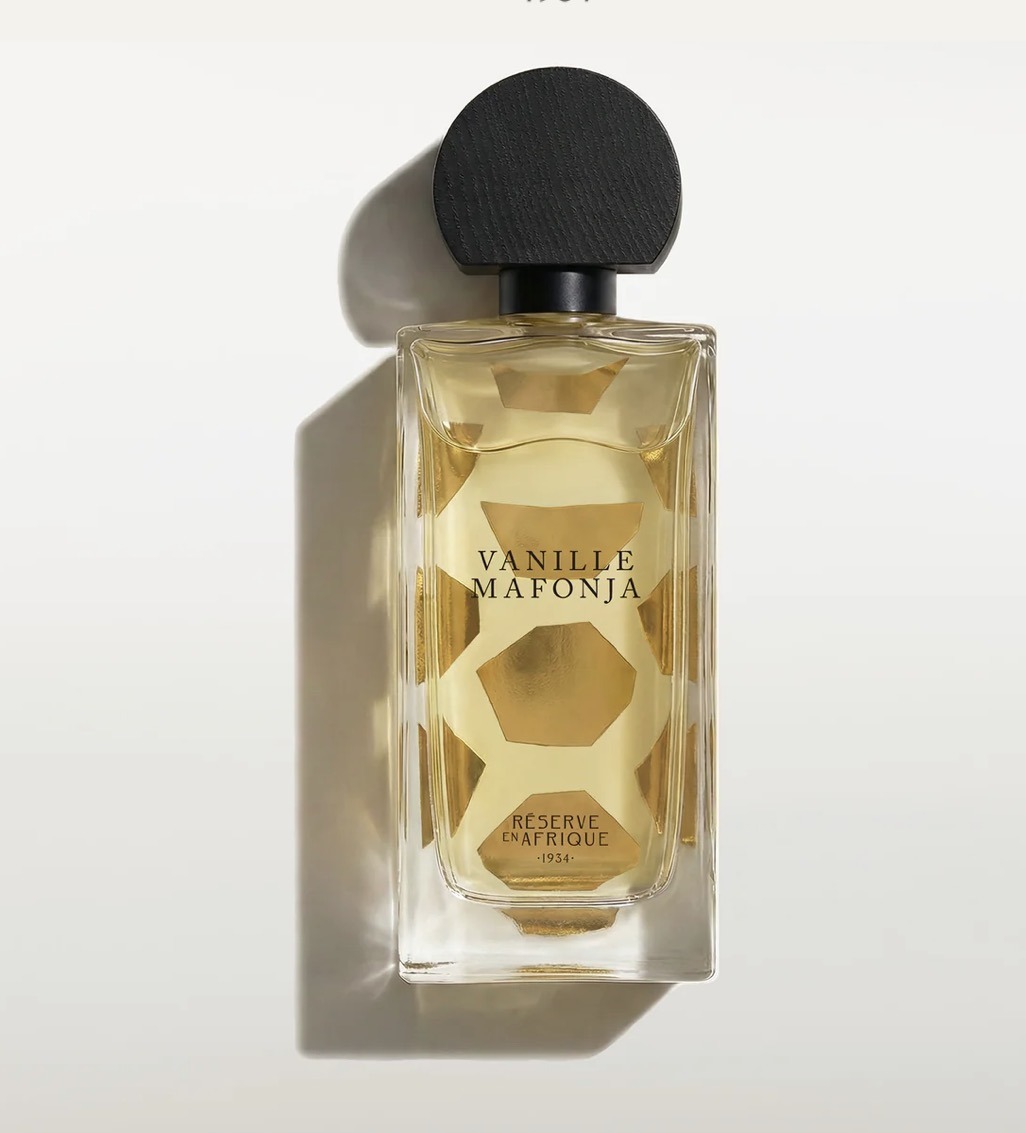
Réserve en Afrique, Vanille Mafonja.
Réserve en Afrique traces back to 1934, when the founders' grandfather left the Levant for Senegal's Sine-Saloum region. Three generations later, the Dakar-based house works in Madagascan vanilla and Moroccan rose, and funds conservation work in the forest their family has protected for decades.

Tanal Ghandour, Scent of Africa — Bellua.
Tanal Ghandour arrived in Senegal from Lebanon in 1985 and has built his life and his business in West Africa ever since. Scent of Africa, based in Ghana, draws on mythology from across the continent, Bellua takes its name from Ghana's tree goddess.